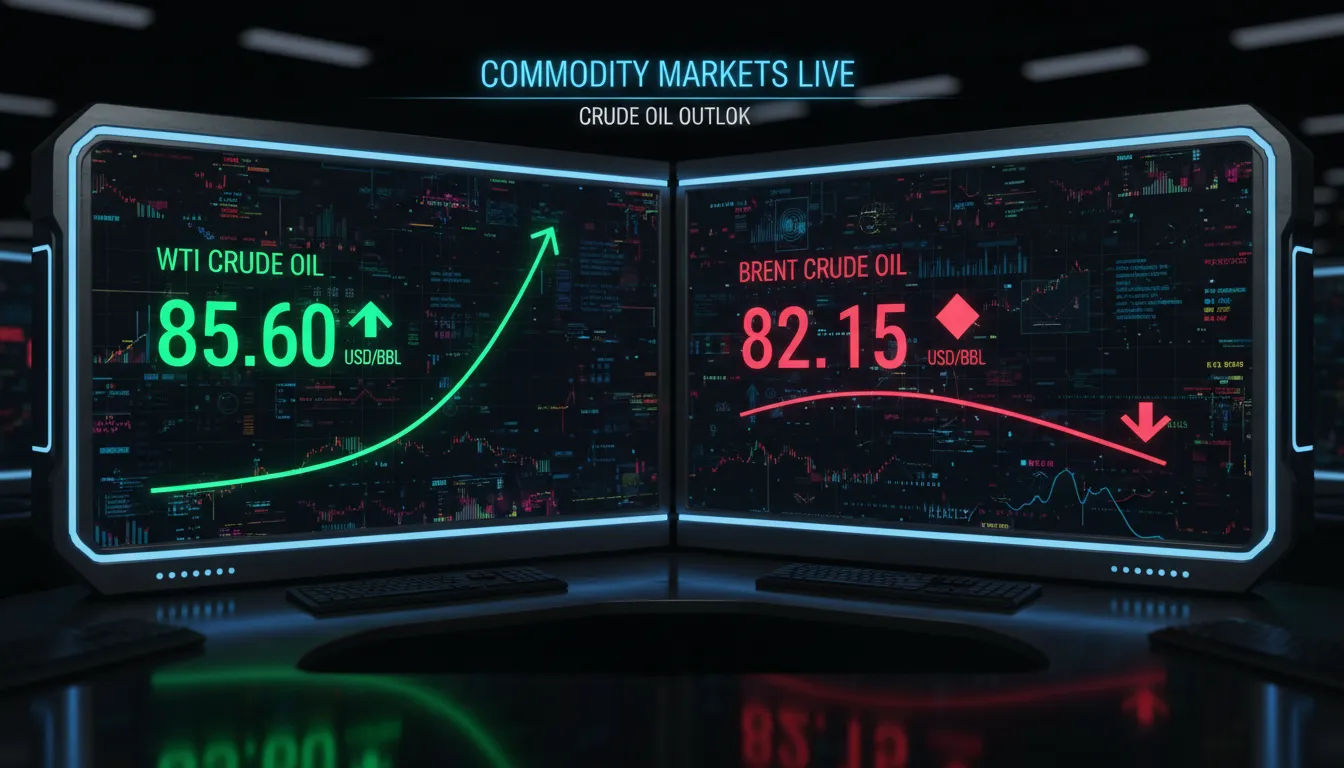
West Texas Intermediate crude surged to $111.29 per barrel on Thursday, decisively overtaking Brent crude—which settled at $107.57—in one of the most striking benchmark inversions seen in the modern oil market. The $3.72 premium that WTI now commands over Brent upends a structural relationship that has held for most of the past decade, signaling a fundamental repricing of supply accessibility as the Strait of Hormuz closure reshapes global crude flows in real time.
The session gains were dramatic on both legs of the spread. WTI surged $11.42, or 11.41%, on the day, while Brent added $7.87, a gain of 7.78%. The differential movement—WTI outpacing Brent by more than three percentage points in a single session—is the kind of spread dislocation that normally takes weeks to develop. Murban crude, Abu Dhabi’s flagship export grade and a key component of the Brent complex, also rose nearly 10% on the session, but it was not enough to prevent Brent from falling behind its American counterpart.
Why WTI Now Trades Above Brent
The inversion is rooted in a simple and urgent market reality: WTI barrels can be loaded and exported from U.S. Gulf Coast terminals without transiting the Strait of Hormuz. Brent-linked grades—sourced from the North Sea, West Africa, and the Persian Gulf—depend heavily on waterborne shipping lanes that have been thrown into disarray by the closure. With tanker traffic through the Strait having effectively collapsed, buyers seeking reliable, near-term delivery are paying an unprecedented premium for crude that does not require navigating the world’s most contested chokepoint.
There is also a structural timing element amplifying the divergence. WTI’s front-month contract currently reflects May delivery, while Brent has already rolled to June. The shorter delivery window in WTI places additional prompt pressure on a market with constrained alternative supply, pushing WTI backwardation to record levels as traders compete for barrels that can actually be delivered in the near term.
"The market is repricing every cargo on the basis of whether it can reach its destination without transiting Hormuz. WTI can. Most of the Brent complex cannot. That’s the entire story of this spread." — Senior crude trader, major U.S. energy firm
The Hormuz Closure Reorders Global Supply
The Strait of Hormuz, the narrow passage between Iran and Oman through which approximately 20% of the world’s seaborne crude oil normally flows, has been effectively shut to commercial tanker traffic since hostilities escalated. Cargoes that would ordinarily load in Kuwait, Iraq, Saudi Arabia’s eastern terminals, and the UAE are now stranded or rerouted through significantly longer and more costly alternative paths. Insurers have imposed prohibitive war-risk premiums on vessels attempting to transit the region, and the majority of major shipping operators have suspended Hormuz transits indefinitely.
The volume of crude affected is staggering. The Strait handles roughly 17 to 21 million barrels per day in normal conditions—a figure that encompasses not only raw crude but also liquefied natural gas and refined products. The sudden unavailability of that corridor has not only driven up prices but forced a rapid reorganization of global refining logistics, with Asian buyers in particular scrambling to source alternative Atlantic Basin and U.S. crude cargoes at significant cost premiums.
President Trump, in remarks from the White House this week, stated that the United States would "hit" Iran "extremely hard" if provocations against commercial oil tankers continued, describing Iran as having "launched deranged terror attacks against commercial shipping." He offered no timeline for reopening the Strait and made no indication that diplomatic back-channels were being pursued. The statement was interpreted by energy markets as confirmation that the supply disruption would not be resolved in the near term.
"There is no credible path to Hormuz reopening in the next 30 days. The market is adjusting to that reality. Inland benchmarks leading seaborne pricing is not a curiosity—it is a rational response to an irrational situation." — Energy market analyst
WTI Backwardation Hits Record Levels
Beyond the outright price level, the structure of the WTI futures curve is sending an equally stark message. Backwardation in WTI—the condition where near-term contracts trade at a premium to deferred ones—surged to record levels in Thursday’s session, reflecting extreme urgency among buyers seeking prompt delivery. This kind of prompt tightness is a classic signal of a market that has moved past price discovery and into genuine physical rationing, where the question is no longer what crude is worth in the abstract but who can actually deliver it and when.
The record backwardation also has practical implications for oil storage economics and hedging strategies. Producers holding WTI-linked inventory are realizing outsized gains on prompt barrels while deferred hedges offer substantially lower protection. Refiners are finding it increasingly expensive to lock in future crude costs, adding uncertainty to margin planning at a moment when demand for refined products—particularly diesel and jet fuel—remains robust.
Refined Products Surge in Tandem
The crude move has transmitted rapidly through the refined products complex. Heating oil futures gained 7.50% on the session, while RBOB gasoline added 6.36%—moves that will translate directly into higher prices at the pump and for heating fuel within days. With the Hormuz closure simultaneously removing supply and driving up the cost of the crude feedstock that does remain available, crack spreads for refiners sourcing Atlantic Basin and WTI-linked crude have widened sharply, providing some margin relief even as input costs climb.
The combined effect on retail fuel prices is expected to be significant. Gasoline prices in many markets were already at multi-year highs following the initial outbreak of the conflict; the renewed acceleration in crude costs will add further pressure. Diesel prices, which affect trucking, agriculture, and industrial logistics across the economy, are similarly positioned for another leg higher in the days ahead.
Market Impact at a Glance
- WTI Crude: $111.29/barrel, up $11.42 (+11.41%) on the session; front-month contract reflects May delivery and is trading at a historic premium to Brent.
- Brent Crude: $107.57/barrel, up $7.87 (+7.78%); rolled to June delivery, reflecting reduced prompt tightness relative to WTI.
- Murban Crude: Rose nearly 10% on the session; Abu Dhabi’s key export grade faces delivery uncertainty given its Persian Gulf origin.
- Heating Oil: Up 7.50% on the session, signaling broad transmission of the crude spike into the refined products complex.
- RBOB Gasoline: Up 6.36%, with retail pump price increases expected to follow within days across major U.S. markets.
- WTI Backwardation: Surged to record levels, indicating extreme near-term supply tightness and immediate demand for deliverable U.S. crude.
What Comes Next
The WTI-over-Brent premium is a structural anomaly that markets will work to close over time—either by rerouting supply, reopening the Strait, or by demand destruction softening the prompt bid for WTI. None of those resolutions appears imminent. U.S. crude export capacity is already running near its limits, constraining how quickly additional WTI supply can reach global buyers. Alternative supply routes around the Cape of Good Hope add weeks of transit time and meaningful cost to every cargo. And on the geopolitical side, the Trump administration’s publicly stated posture leaves little room for a rapid diplomatic resolution.
For as long as the Strait of Hormuz remains closed and Washington signals no off-ramp, the fundamental logic driving this inversion remains intact. WTI’s record premium over Brent is not a pricing error to be arbitraged away—it is the market’s clearest statement yet that geography has become the most valuable commodity in oil.