West Texas Intermediate crude oil has surged approximately 51% over the past 30 days, breaching the psychologically critical $100-per-barrel threshold for the first time in years as the ongoing U.S.-Iran military conflict disrupts global supply chains and rattles energy markets worldwide. The $34.36 gain represents the single largest monthly price climb recorded since WTI futures began trading on the New York Mercantile Exchange in 1983, surpassing even the dramatic spikes seen during the 1990 Gulf War and the post-pandemic demand rebound of 2021.
Record Monthly Gain Resets Energy Market Expectations
The scale of this price move is difficult to overstate. WTI entered March trading around $67 per barrel, a level that had held broadly steady through the early months of 2026 as OPEC+ maintained its disciplined output management strategy and global demand growth remained moderate. The eruption of open hostilities between the United States and Iran changed that calculus overnight. Within days of the first U.S. airstrikes, WTI futures had cleared $80, then $90, before settling above $100 as the market absorbed the full scope of the supply disruption unfolding across the Persian Gulf.
The $34.36 absolute increase eclipses previous monthly records set during the Russian invasion of Ukraine in early 2022, when Brent crude gained roughly $24 in a single month. Energy analysts at several major investment banks have revised their full-year price outlooks sharply higher, with some now projecting sustained trading in a $95–$120 range depending on how quickly—or whether—a ceasefire materializes.
"We have not seen a supply shock of this magnitude and speed since the Arab oil embargo. The market is pricing in a prolonged conflict, and until there is a credible off-ramp, prices will stay elevated." — Senior Energy Strategist, major Wall Street investment bank
Trump: No Swift End to Iran Conflict
Fueling the sustained price rally, President Trump indicated this week that military operations against Iran were far from over. Speaking at a press briefing, Trump described the campaign as a necessary step to neutralize what his administration has characterized as an existential threat to regional stability and American interests in the Middle East. He declined to provide a timeline for the cessation of hostilities, stating only that the United States would pursue its objectives "until the job is done."
The statement effectively extinguished near-term hopes among traders for a quick diplomatic resolution. Earlier in the conflict, some market participants had placed premiums on the possibility of a rapid ceasefire brokered through Gulf Cooperation Council intermediaries, a scenario that would have allowed some supply normalization. Those expectations have now largely been priced out, leaving a market firmly in risk-premium territory.
Iran holds roughly 3–4% of global oil production capacity and, critically, its territory borders the Strait of Hormuz, through which approximately 20% of the world's seaborne crude oil passes. Even partial disruptions to tanker transit through the strait are amplified significantly in global markets, and the current conflict has triggered both insurance surcharges on vessels transiting the area and voluntary rerouting by major shipping operators, adding days and significant cost to supply chains stretching from the Gulf to refineries in Asia and Europe.
Pump Prices Hit Multi-Year Highs
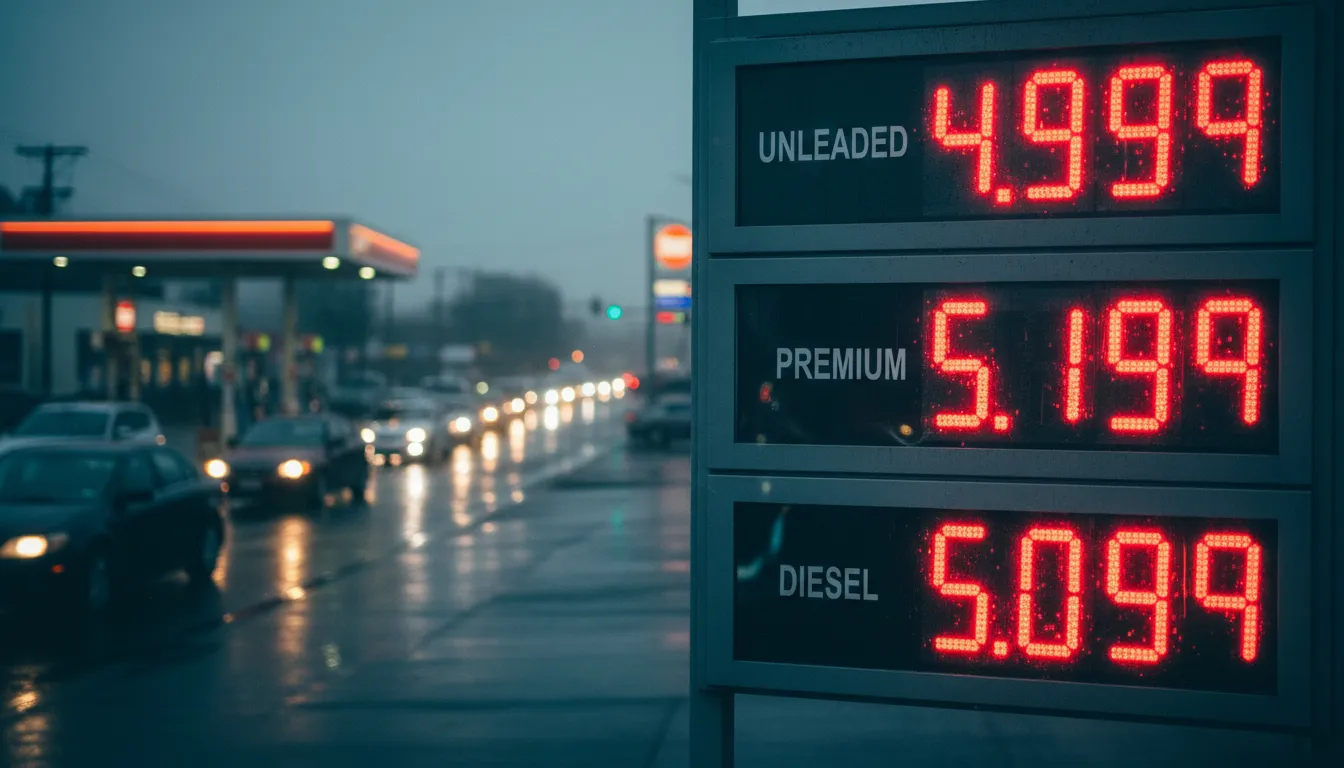
The crude oil price spike has moved swiftly through the refinery complex and onto the forecourt. The national average price of regular gasoline has topped $4.00 per gallon for the first time since 2022, with prices in coastal markets and major metropolitan areas running considerably higher. Diesel fuel, which powers the trucking, rail, and agricultural sectors, has climbed to a national average of $5.50 per gallon—a level that puts direct pressure on the cost of consumer goods, food distribution, and manufacturing logistics across the country.
Airline fuel costs have surged in tandem, with jet fuel prices up more than 40% on a month-over-month basis. Several carriers have already filed emergency fuel surcharges on both domestic and international routes, and analysts expect further fare increases in the coming weeks if crude remains above $100. Heating oil prices in the Northeast have similarly jumped, arriving at an uncomfortable juncture as the spring season begins but overnight temperatures in many regions remain below seasonal norms.
Market Impact
The conflict-driven supply shock has rippled across the entire energy complex, lifting prices for crude, refined products, and related energy commodities simultaneously:
- WTI Crude: Trading above $100 per barrel, up 51% month-over-month and at its highest level since late 2022. Futures markets show backwardation deep into the curve, indicating traders expect tight supply to persist.
- Brent Crude: Moving in near-lockstep with WTI, Brent has also cleared the $100 threshold and is trading at a slight premium, reflecting additional demand from European buyers seeking to diversify away from Persian Gulf supply.
- Gasoline: National average above $4.00 per gallon, with California, New York, and Washington state markets exceeding $4.80 at the pump. Crack spreads for gasoline have widened sharply, reflecting both the crude cost increase and high summer blend changeover costs.
- Diesel / Heating Oil: At $5.50 per gallon nationally, diesel prices are adding a measurable cost burden to supply chains. Trucking companies and agricultural operators have begun seeking diesel surcharge adjustments in their contracts.
- Natural Gas: U.S. natural gas has seen more modest gains but is benefiting from substitution demand as industrial users explore fuel-switching options to reduce exposure to high crude prices.
OPEC+ Response and Strategic Reserve Releases
The International Energy Agency convened an emergency meeting this week and member countries agreed to coordinate a release from strategic petroleum reserves totaling approximately 60 million barrels over the next 60 days—a move designed to cushion markets but widely viewed as insufficient to fully offset the lost supply from the Gulf. The United States also announced a drawdown from the Strategic Petroleum Reserve, though critics noted that the SPR has been at reduced capacity following prior releases and may have limited capacity to influence prices over an extended conflict period.
OPEC+ held an extraordinary virtual session on Tuesday. Saudi Arabia, the UAE, and Iraq—the bloc's largest producers—pledged to maximize available production capacity within 30 to 60 days, a commitment that markets received cautiously given the logistical time required to bring shut-in barrels back online and route them away from the disrupted Persian Gulf corridor. Russian OPEC+ delegates declined to comment publicly on the conflict, maintaining Moscow's stated position of neutrality.
What to Watch
For traders and market participants, the key variables over the coming days and weeks include any shift in the diplomatic posture of the Trump administration, any direct action against Gulf shipping infrastructure, and the pace at which alternative supply routes and producers can compensate for lost Iranian and transit volumes. Specific items to monitor closely:
- Statements from the White House and Pentagon on the scope and duration of military operations
- Weekly EIA crude inventory data, which will reflect early demand destruction and SPR release volumes
- Tanker tracking data for Strait of Hormuz transits as a real-time measure of supply flow disruption
- Saudi Aramco and UAE ADNOC production ramp-up announcements and timelines
- U.S. consumer inflation data, which will be substantially affected by energy prices in the months ahead
- Congressional pressure for further SPR releases or emergency energy measures
With President Trump signaling no near-term end to the conflict and Iran's supply corridor effectively offline, the energy market appears set for a sustained period of elevated prices. The $100 level, once a distant ceiling in a well-supplied market, has become the new floor for as long as the geopolitical uncertainty persists.