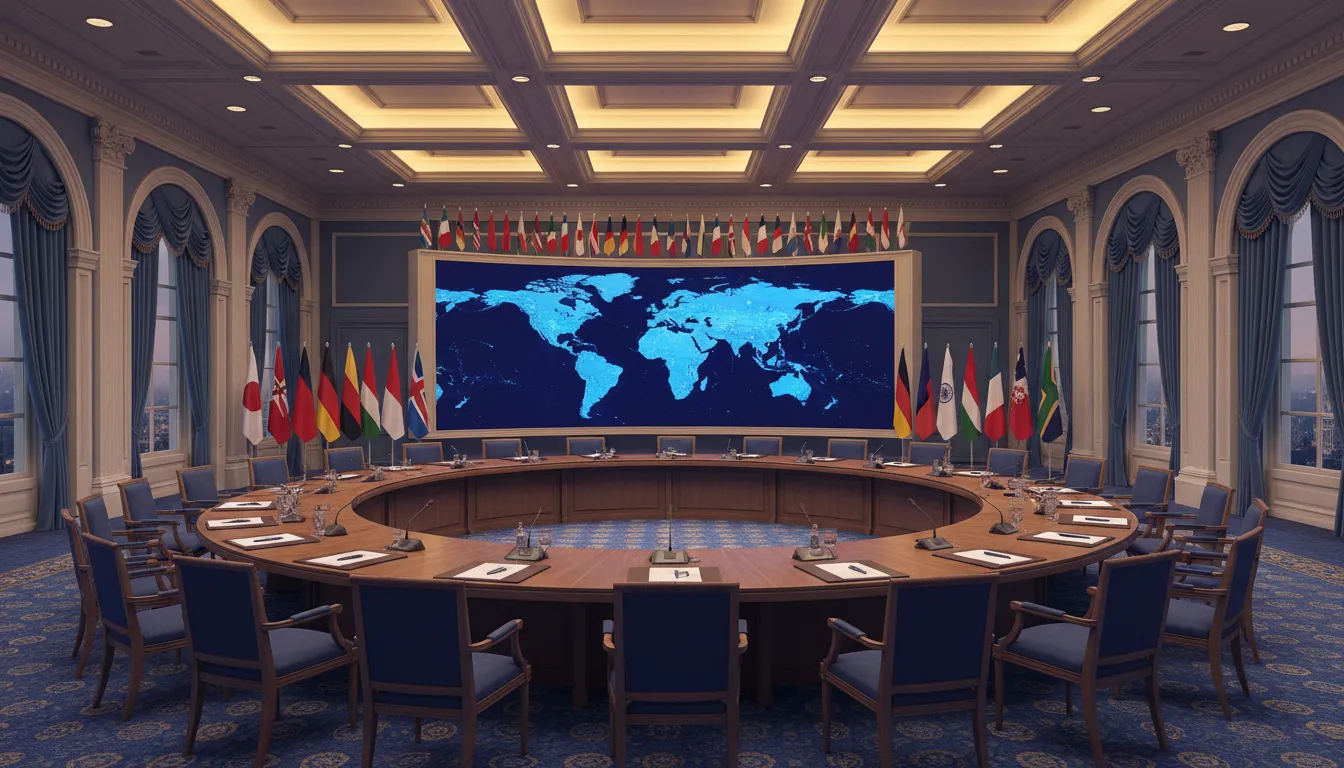
The United Kingdom is hosting a high-stakes virtual summit bringing together senior officials from 36 nations in a coordinated effort to restore freedom of navigation through the Strait of Hormuz. Chaired by UK Foreign Secretary Yvette Cooper, the meeting is focused on assessing all viable diplomatic and political measures to reopen one of the world's most strategically critical maritime chokepoints — with the conspicuous absence of the United States from the negotiating table.
A Coalition Without Washington
The summit's breadth — spanning nations from Europe, Asia, the Gulf, and beyond — underscores the degree to which the Hormuz closure has crystallised into a shared international crisis. Yet the absence of the United States from the 36-country group is itself a signal of the fractured diplomatic landscape that has allowed the situation to persist. Washington's non-participation leaves a notable gap in Western coordination and raises questions about the effectiveness of any agreement reached without American backing.
Foreign Secretary Cooper has framed the meeting as a pragmatic, multilateral effort to exhaust every diplomatic avenue before any escalation becomes unavoidable. The UK has been keen to position itself as a neutral convening power capable of bridging divides between European allies, Gulf states with direct commercial interests, and Asian economies most exposed to supply disruptions.
"We must exhaust every diplomatic and political avenue to restore freedom of navigation. The safety of seafarers and the unimpeded flow of essential goods are non-negotiable principles of international law." — Yvette Cooper, UK Foreign Secretary
Why the Strait of Hormuz Matters
The Strait of Hormuz is the single most important chokepoint for global oil and gas trade. Situated between Iran and the Oman peninsula, the strait is just 33 kilometres wide at its narrowest point, yet roughly 20 to 21 million barrels of crude oil and petroleum products pass through it every day — equivalent to approximately 20% of global oil consumption and around 25% of total liquefied natural gas (LNG) trade. Any prolonged closure, or even a credible threat of closure, sends immediate shockwaves through energy markets worldwide.
Beyond crude oil, the strait is a vital artery for liquefied natural gas exports from Qatar, one of the world's largest LNG producers. European nations that have worked to diversify away from Russian gas pipelines in recent years are now acutely exposed to any disruption at Hormuz, adding an additional layer of urgency to the UK-led diplomatic effort.
Ships currently trapped in or near the strait represent not only enormous commercial losses but also a humanitarian concern, with thousands of seafarers stranded in uncertain and potentially dangerous conditions. The summit agenda specifically addresses guaranteeing the safety of these crews and establishing a mechanism for their safe passage.
Diplomatic and Political Measures on the Table
According to briefings ahead of the meeting, participating nations are expected to discuss a range of measures including direct diplomatic outreach to Tehran, the possibility of a UN Security Council resolution calling for resumption of shipping, targeted economic incentives tied to reopening, and the establishment of a multilateral maritime monitoring mission in the Gulf of Oman. The latter proposal would aim to verify compliance and provide confidence to commercial shipping operators who have suspended transits.
Gulf Cooperation Council members, particularly Saudi Arabia and the UAE, are represented at the summit and are understood to favour a negotiated solution that avoids further escalation in the region. Both countries have significant export interests at stake, as a large share of their own crude oil exports travels through the strait before reaching customers in Asia and Europe.
Asian consuming nations — including Japan, South Korea, and India — are also participating and have been pressing for the fastest possible resolution. Japan and South Korea in particular have seen energy import costs surge sharply since the closure, with knock-on effects for their domestic manufacturing sectors.
Market Impact
The ongoing closure has driven Brent crude prices to elevated levels not seen since the energy crisis years of 2022. Energy traders are closely watching the outcome of the summit for any sign of a credible diplomatic breakthrough, though most analysts caution that even a successful meeting is unlikely to translate into immediate physical reopening of the strait.
- Brent Crude: Prices remain sharply elevated on supply disruption fears, with the closure premium estimated at $15–$25 per barrel above pre-crisis levels.
- WTI: US domestic crude has seen comparatively lower upside due to reduced direct exposure, though refinery margins have tightened on constrained global supply.
- LNG: Spot LNG prices in Europe and Asia have surged as Qatari exports remain disrupted, reviving fears of a repeat of the 2022 energy crunch.
Options markets are pricing elevated volatility, reflecting broad uncertainty about how quickly a diplomatic resolution could be implemented even if agreed in principle. Some traders have begun hedging against a scenario in which the strait remains partially or fully closed through the third quarter of 2026.
What to Watch
The immediate focal point for markets and policymakers is the communique expected to emerge from the summit. A strong, unified statement with concrete next steps — including a timeline for follow-up engagement with Tehran — would likely prompt a moderate pullback in the crisis premium embedded in crude prices. A vague or fractured outcome, by contrast, could reinforce bearish sentiment around the prospects for a near-term resolution.
Separately, any indication that the United States is willing to participate in a subsequent round of talks, or to endorse the multilateral framework established at today's summit, would be a significant positive signal. The absence of American involvement is the single largest question mark hanging over the diplomatic process.
Market participants should also monitor whether the summit produces any agreement on safe passage corridors for trapped vessels. A partial humanitarian arrangement, even short of a full reopening, could relieve some of the most acute pressure on seafarer safety and demonstrate that diplomatic engagement is producing tangible results. The coming 48 to 72 hours are likely to be pivotal for both the geopolitical trajectory of the crisis and the direction of global oil prices.