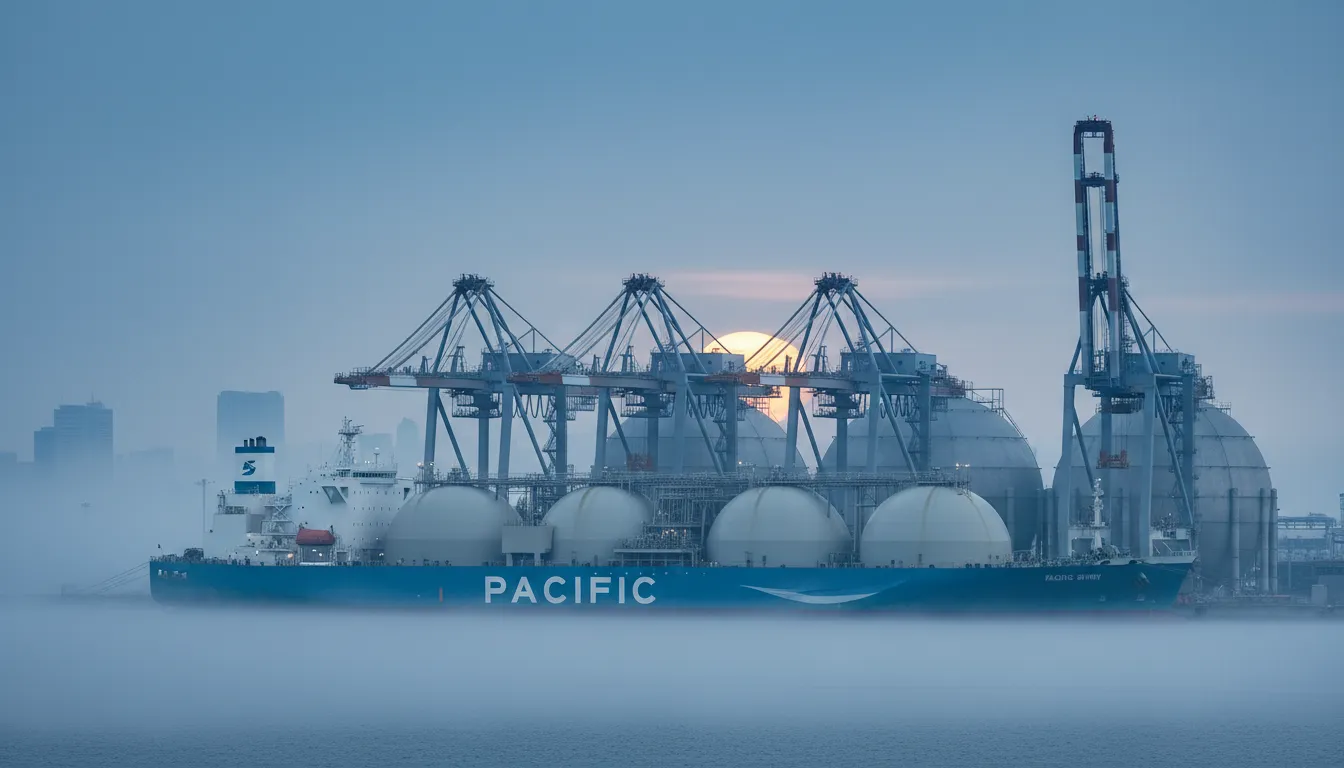
JERA, the world's largest liquefied natural gas buyer and Japan's dominant power generation company, has terminated a 20-year supply agreement with U.S.-based Commonwealth LNG. The cancellation, disclosed through a U.S. Department of Energy filing on April 3, 2026, eliminates a contract that would have delivered 1 million tons of LNG annually to Japan beginning as late as 2031. Neither company publicly disclosed the reasons behind the decision, but the move arrives against a backdrop of persistent project delays, evolving U.S. energy policy, and mounting uncertainty over Japan's long-term energy procurement strategy.
A Deal That Never Reached Production
The JERA-Commonwealth agreement was originally signed in June 2025, committing to a 20-year offtake arrangement at a volume of 1 million tons per year. At the time of signing, Commonwealth LNG had projected a production start date of 2029, a timeline consistent with the broader ambitions of several U.S. Gulf Coast LNG export projects jostling for financing and federal approvals in that period. That target slipped materially, with the revised schedule pushing first production to 2031 before the deal was ultimately unwound entirely.
The two-year delay between original and revised start dates is significant in the LNG market, where long-lead-time infrastructure decisions require buyers to plan procurement windows years in advance. For a company the scale of JERA—which manages supply contracts spanning dozens of suppliers across multiple continents—a project that cannot commit to a firm delivery schedule carries portfolio risk that is difficult to absorb. The absence of any public explanation from either party suggests the cancellation may reflect a combination of project execution concerns, commercial renegotiation dynamics, and strategic recalibration on JERA's part.
Commonwealth LNG has previously pointed to regulatory headwinds as a factor in its project development timeline. The Biden administration's temporary moratorium on new LNG export capacity approvals, implemented in early 2024 amid environmental pressure over the climate impact of U.S. natural gas exports, created a period of uncertainty for projects still awaiting final Department of Energy authorization. While that moratorium was subsequently lifted, the disruption it introduced to project financing timelines and investor confidence left a lasting mark on several mid-stage U.S. LNG developments, including Commonwealth's.
JERA's Broader U.S. LNG Ambitions Remain Intact
Despite the Commonwealth cancellation, JERA's strategic orientation toward U.S. LNG supply is unchanged and, if anything, more ambitious than it was when the Commonwealth deal was inked. The company has separately announced plans to triple its total U.S. LNG purchases to 5.5 million tons annually—a target that represents roughly 10% growth over Japan's current aggregate U.S. import volumes. Those plans center on agreements with established U.S. LNG exporters Cheniere Energy and Sempra Infrastructure, with delivery expected to begin around 2030.
Of note, approximately 2.5 million tons of JERA's planned U.S. LNG expansion sits in non-binding agreements, underscoring the degree to which the company is keeping its options open as project timelines and market conditions continue to shift. The Commonwealth cancellation serves as a reminder that non-binding and even binding long-term LNG contracts can be unwound when project fundamentals deteriorate, a reality that will weigh on the calculus of other buyers and sellers operating in the same market.
"Increasing uncertainty about future LNG procurement" — Japan's Ministry of Economy, Trade and Industry, citing the broader context behind the country's energy policy adjustments in April 2026
Market Impact: What the Cancellation Signals
The termination of the JERA-Commonwealth agreement has several layers of significance for global LNG markets. At the project level, it removes a committed anchor buyer from Commonwealth LNG's commercial stack—the kind of long-term offtake agreement that underpins project financing from lenders and equity investors. Without a replacement buyer of JERA's standing, Commonwealth faces a more difficult path to achieving the final investment decision that would unlock construction funding and move the project toward operational status.
More broadly, the cancellation reflects a structural tension running through the global LNG market. Demand from major Asian importers—Japan, South Korea, China, and increasingly India—remains robust, but buyers have grown more selective about which projects they will commit to over multi-decade horizons. Projects that demonstrate execution risk, whether through permitting delays, financing gaps, or shifting regulatory environments, are increasingly being passed over in favor of brownfield expansions and projects with established track records.
Japan's energy situation adds a further dimension. The country's industry ministry relaxed coal power restrictions for one year beginning April 2026, a policy adjustment it directly linked to growing uncertainty about LNG availability and pricing. That context suggests Japanese utilities and power generators are hedging their fuel exposure across multiple vectors simultaneously—extending coal commitments as a bridge while selectively pruning LNG contracts that carry execution risk. The JERA-Commonwealth cancellation fits that pattern precisely.
- Commonwealth LNG: Loses its anchor offtaker, complicating the path to a final investment decision and increasing the urgency of securing replacement buyers before project momentum stalls further.
- U.S. LNG export sector: A signal that Asian buyers will not indefinitely absorb project delays; developers with slipping timelines face heightened contract termination risk across their offtake portfolios.
- Global LNG spot market: Near-term supply expectations are unaffected, as Commonwealth had not yet reached production. The impact is felt in the forward curve, where the prospect of delayed incremental U.S. supply keeps the 2030–2032 outlook tighter than it would otherwise be.
- Japanese energy policy: The cancellation reinforces the METI narrative of procurement uncertainty, potentially supporting further policy flexibility around coal and nuclear as bridge energy sources while the LNG supply picture clarifies.
- Competing U.S. LNG projects: Cheniere and Sempra, JERA's preferred U.S. partners, benefit indirectly as buyer confidence consolidates around projects with proven execution rather than greenfield aspirants.
What to Watch
The JERA-Commonwealth cancellation is unlikely to be an isolated event in the current LNG market environment. Several dynamics will determine how this story develops over the coming months and whether it triggers a broader reassessment of long-term contract risk across the sector:
- Whether Commonwealth LNG is able to secure a replacement offtake agreement of comparable scale and creditworthiness, which would be necessary to restore lender confidence and keep the project timeline viable
- The pace at which JERA finalizes its binding agreements with Cheniere and Sempra, which will clarify how much of its 5.5 million ton U.S. LNG target is actually locked in versus contingent on non-binding terms
- Any further policy statements from Japan's METI on LNG procurement strategy, particularly as the country's one-year coal relaxation window progresses and energy planners reassess their 2030s fuel mix
- The status of other mid-stage U.S. Gulf Coast LNG export projects still seeking anchor buyers, as the Commonwealth situation will focus attention on which developers have firm offtake versus indicative interest
- LNG spot and forward prices, which will influence how aggressively buyers and sellers seek or resist long-term contract structures versus spot exposure in the current environment
- Any public comment from either JERA or Commonwealth LNG clarifying the commercial or technical basis for the termination, which could shift market interpretation of the cancellation's implications
For now, the cancellation stands as a pointed reminder that the race to lock in U.S. LNG supply for the 2030s is not a foregone conclusion for project developers. JERA has made clear where its preferences lie—with established operators who can deliver on schedule—and other major buyers are likely drawing the same conclusions as they review their own long-term procurement books.