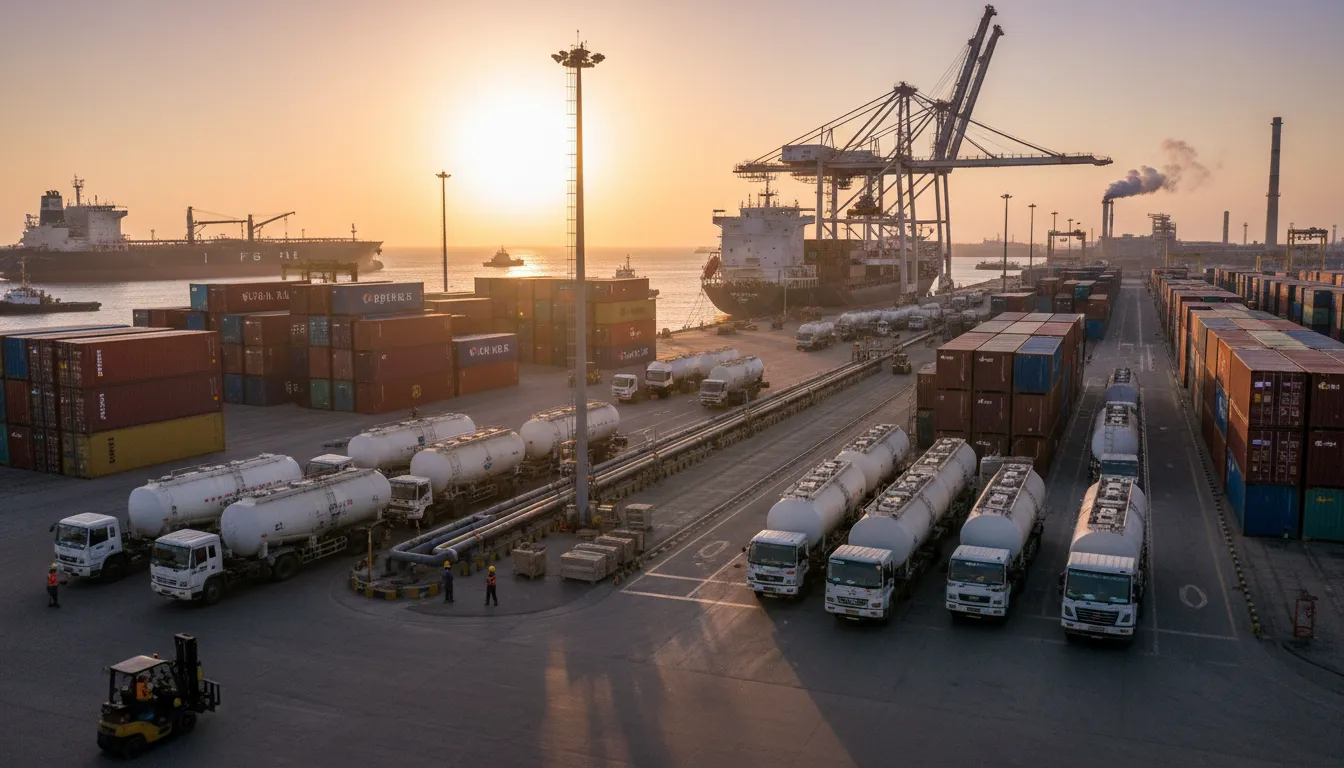
India's Ministry of Finance on Thursday announced a full customs duty exemption on 40 critical petrochemical products, effective immediately and running through June 30, 2026. The emergency measure is designed to cushion a broad range of downstream industries from a worsening supply crunch driven by the ongoing conflict in the Middle East, which has severely disrupted tanker traffic and refinery feedstock flows across the region.
Why India Is Acting Now
The decision reflects a sharp tension that has been building inside India's energy and industrial policy for several months. As Middle Eastern hostilities have intensified, Indian refiners have faced mounting pressure to redirect domestically produced petrochemical feedstocks toward LPG blending and production. LPG is the primary cooking fuel for hundreds of millions of Indian households, and the government has made supply security for that product a non-negotiable political priority.
The knock-on consequence has been a significant tightening of domestic availability for industrial petrochemicals — materials that serve as inputs for plastics, packaging, textiles, paints, adhesives, pharmaceuticals, and agriculture. Factory operators across these sectors have reported sharp increases in input costs and, in some cases, production curtailments as spot market prices for key intermediates surged well above pre-conflict levels.
"The customs duty exemption is a targeted, time-bound intervention to ensure that India's manufacturing base does not bear an undue burden from supply dislocations that are entirely outside its control." — Ministry of Finance, Government of India
Among the 40 petrochemicals covered by the exemption are ethylene, propylene, butadiene, benzene, toluene, xylene, styrene, and a range of their downstream derivatives. These are the core building blocks of the modern chemical industry, and their prices had climbed sharply since the Middle East conflict began disrupting Red Sea and Persian Gulf shipping lanes.
The Middle East Conflict and Global Supply Chains
The war in the Middle East has produced ripple effects throughout global energy and commodity markets that extend well beyond crude oil prices. Several of the world's largest petrochemical complexes are located in the Gulf Cooperation Council states, and sustained conflict in the region has raised insurance premiums for tanker operators, rerouted shipping away from traditional transit corridors, and created intermittent bottlenecks at loading terminals.
For India specifically, which imports substantial volumes of naphtha, ethane, and other petrochemical feedstocks from Gulf producers, the disruption has been acute. Spot procurement has become more expensive and less reliable, as buyers compete globally for cargoes that are being drawn away from Asia toward European markets facing their own supply pressures.
The Indian government had previously introduced a series of partial measures — including tariff rate quota adjustments and temporary reductions on select products — but Thursday's sweeping exemption across 40 product lines represents the most comprehensive response to date. The Finance Ministry framed the step as a direct consequence of force majeure conditions in global supply chains rather than a permanent shift in trade policy.
Downstream Industry Relief
The industries that stand to benefit most immediately are those operating in sectors with thin margins and limited ability to pass through raw material cost increases. Packaging manufacturers, who rely heavily on polyethylene and polypropylene, had been particularly vocal about the cost pressures they were experiencing. The textiles and synthetic fiber sector, a major employer in states such as Gujarat and Rajasthan, had also flagged that elevated input costs were beginning to affect export competitiveness.
The pharmaceuticals industry, which uses petrochemical intermediates in the production of active pharmaceutical ingredients and drug delivery systems, welcomed the announcement. India is the world's largest supplier of generic medicines by volume, and any sustained increase in chemical input costs carries significant implications for both domestic healthcare affordability and global supply chains for essential drugs.
Agricultural chemicals — herbicides, pesticides, and fertilizer additives — also depend on petrochemical feedstocks, and the exemption arrives at a strategically sensitive moment ahead of India's kharif planting season.
Market Impact
The announcement added complexity to an already volatile commodity pricing environment. While the waiver is designed to lower domestic input costs, the broader signal it sends — that a major emerging-market government is intervening aggressively to manage supply chain stress — reflects just how significantly the Middle East conflict has reshaped global energy and chemical flows.
- Brent Crude: Continued to trade at elevated levels above the year's opening range, with the geopolitical risk premium persisting as markets assess the duration and geographic spread of Middle Eastern hostilities.
- Petrochemical Spreads: Cracker margins in Asia had already tightened considerably prior to this announcement; the Indian duty waiver may pull incremental import demand into the region, providing some support for spot cargoes.
- LPG: India's prioritization of LPG output from domestic refineries underscores continued strong state-level demand for cooking fuel, a structural feature of Indian energy consumption that is unlikely to change in the near term.
- Shipping and Freight: Any increase in Indian petrochemical imports will add incremental demand for chemical tanker capacity at a time when vessel availability in the Persian Gulf and Red Sea corridors is constrained.
Policy Duration and Renewal Risk
The June 30, 2026 end date sets up a decision point for Indian policymakers at mid-year. If the Middle East conflict remains unresolved and domestic petrochemical supply constraints persist, the Finance Ministry will face pressure to either extend the exemption or make portions of it permanent. Domestic petrochemical producers, who compete directly with imports, are already likely to be lobbying against renewal, while downstream manufacturing lobbies will push in the opposite direction.
Trade analysts note that India has used similar time-limited duty exemptions before in response to commodity shocks — most notably during the COVID-19 pandemic and during the 2022 European energy crisis — and that the temporary nature of the measure is consistent with New Delhi's broader approach of targeted, reversible interventions rather than structural tariff reform.
What to Watch
Market participants and industry observers should monitor several developments in the weeks ahead. First, whether import volumes for the covered petrochemicals actually increase materially, and from which origins — Gulf producers, Southeast Asian crackers, or US Gulf Coast exporters. Second, whether domestic Indian petrochemical producers respond by lobbying for countervailing protections or whether they redirect their own output strategies in light of changed incentives. Third, and most consequentially for energy markets broadly, how the Middle East conflict evolves: any escalation that further constrains Gulf output or shipping would likely force additional emergency responses not just from India but from petrochemical-dependent economies across Asia. The June 30 deadline will arrive quickly, and the conditions that prompted this intervention show few signs of resolving in the near term.