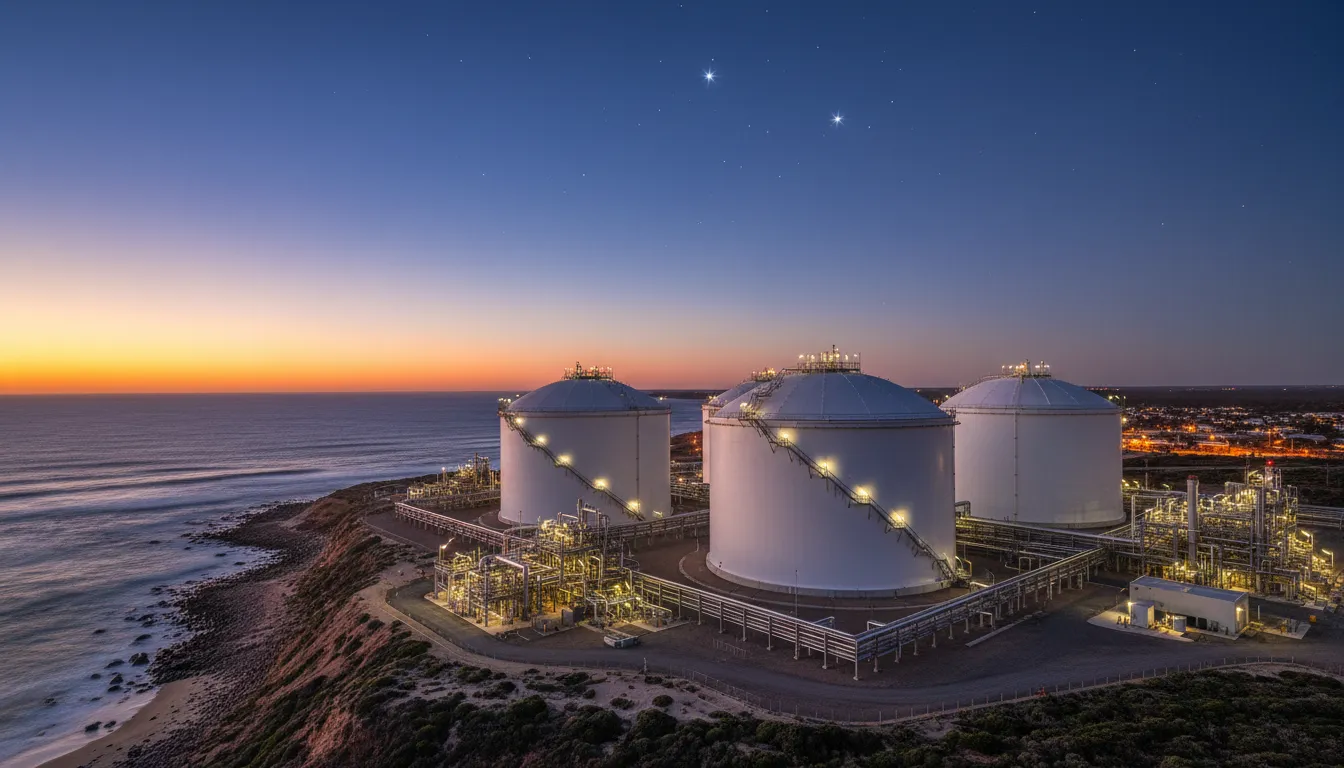
Australia's federal government has signalled it is prepared to invoke emergency powers to protect domestic natural gas supply on the country's east coast, as official forecasts warn of a potential supply shortfall in the third quarter of 2026. The Albanese Government's move comes against a backdrop of elevated global energy prices and continued disruption to international gas trade stemming from the ongoing Middle East conflict, which has strained liquefied natural gas (LNG) shipping routes and tightened spot market availability worldwide.
The Looming East Coast Shortfall
Australia's east coast gas market has long operated under pressure, with large LNG export terminals in Queensland competing with domestic users for gas produced from the same fields. The Australian Energy Market Operator (AEMO) has flagged a forecast deficit for the July-to-September quarter of 2026, a period that encompasses peak winter heating demand across New South Wales, Victoria, South Australia, and Queensland.
The shortfall risk is being amplified by two converging forces: declining output from ageing conventional gas fields in the Bass Strait and Cooper Basin, and a tightening of globally traded LNG as Middle East instability raises risk premiums and diverts cargoes away from the Asia-Pacific region. Australian importers and distributors that had relied on spot LNG purchases to bridge domestic gaps are now facing higher costs and reduced availability.
Industry analysts estimate that without intervention, the east coast could face a gas deficit of between 15 and 30 petajoules during the third quarter — enough to affect industrial users such as fertiliser manufacturers, aluminium smelters, and glass producers, as well as residential consumers during the coldest months of the year.
What the Emergency Powers Would Involve
Under Australia's existing legislative framework, the federal government retains the ability to trigger the Australian Domestic Gas Security Mechanism (ADGSM). This mechanism, introduced in 2017 and updated in subsequent years, allows the Resources Minister to impose export controls on LNG producers if they are not meeting their domestic market obligations. In practice, this means the government can require exporters — primarily the large joint ventures operating the Gladstone LNG facilities in Queensland — to redirect gas volumes to the domestic market rather than fulfilling overseas contracts.
The Albanese Government has indicated it is reviewing whether the current thresholds and trigger conditions within the ADGSM are sufficient to address the scale of the projected Q3 2026 shortfall, and whether more direct interventions may be warranted. Options reportedly under consideration include lowering the price cap at which domestic gas must be offered, extending the duration of any export restrictions, and expanding the definition of domestic market obligations to capture a wider range of producers.
"We are not going to stand by while Australian households and businesses face gas shortfalls, particularly when the geopolitical situation overseas is already pushing up energy costs. All options are on the table." — Senior Government Spokesperson, Canberra
The government has also indicated that consultation with state governments, industry bodies, and major gas users will proceed rapidly given the relatively short lead time before the third quarter begins.
Middle East Conflict as a Catalyst
The broader context driving urgency in Canberra is the sustained disruption to global energy markets caused by conflict in the Middle East. Attacks on shipping in the Red Sea and the Persian Gulf throughout late 2025 and into 2026 have elevated marine insurance costs and caused LNG tankers to reroute around the Cape of Good Hope, adding days to voyage times and reducing the effective supply of floating capacity available to the Asia-Pacific market.
Several major LNG suppliers in the Gulf region have also curtailed output or delayed new production projects in response to security conditions on the ground. The net effect has been a tightening of the global LNG market that has pushed spot prices back toward levels last seen during the 2022 European energy crisis.
For Australia — which is simultaneously one of the world's largest LNG exporters and a country with its own domestic gas security challenges — the situation creates a direct policy tension between honouring export commitments to long-term buyers in Japan, South Korea, and China, and ensuring adequate supply for its own population and industrial base.
Market Impact
News of a potential Australian government intervention has already begun to ripple through regional energy markets. LNG spot prices in the Asia-Pacific, which were already elevated relative to historical norms, firmed further on the prospect of reduced Australian export availability. Brent crude oil prices remain sensitive to any escalation in the Middle East and to signs that broader energy supply chains are under strain.
- Brent Crude: Trading around multi-month highs as Middle East conflict sustains a geopolitical risk premium across all energy commodities.
- WTI: Closely tracking Brent with a modest discount; US domestic production provides some cushion but global risk sentiment remains elevated.
- Asian LNG Spot (JKM): Prices firmed on news of potential Australian export restrictions, with traders pricing in reduced availability from Gladstone terminals in Q3 2026.
- Natural Gas: Australian east coast wholesale gas prices rose on the announcement, with forward contracts for Q3 delivery seeing the sharpest increase.
Industry Reaction
LNG producers operating in Australia have pushed back against the prospect of export controls, arguing that such interventions undermine the long-term investment case for new gas projects and damage Australia's reputation as a reliable supplier to Asian partners. The Australian Petroleum Production and Exploration Association (APPEA) warned that unilateral restrictions could have consequences for future capital commitments to upstream gas development, particularly at a time when the country needs new supply to offset declining legacy fields.
Domestic gas users, however, have welcomed the government's stance. The Energy Users Association of Australia said that industrial customers have been bearing the brunt of elevated gas prices for several years and that government action to ensure adequate domestic supply is both overdue and appropriate given the current circumstances.
State governments in Victoria and New South Wales, which together account for the majority of east coast gas consumption, have also expressed support for federal intervention, having faced criticism from households and businesses over energy affordability and reliability in recent months.
What to Watch
The key developments to monitor in coming weeks include the release of AEMO's updated gas forecasting report, which is expected to provide a more precise quantification of the projected Q3 shortfall and the conditions under which the ADGSM trigger would be met. Any formal notification to LNG exporters that export controls are being considered would represent a significant escalation and is likely to move markets.
Traders and analysts should also watch for signals from Japan, South Korea, and China regarding their willingness to accept reduced Australian LNG deliveries and whether they can source alternative supply from the United States, Qatar, or other producers. Any deterioration in the Middle East security situation that further tightens the global LNG market would increase the probability and scope of Australian government action. Finally, domestic gas prices in Australia's east coast market will serve as a real-time barometer of supply-demand conditions as the third quarter approaches.