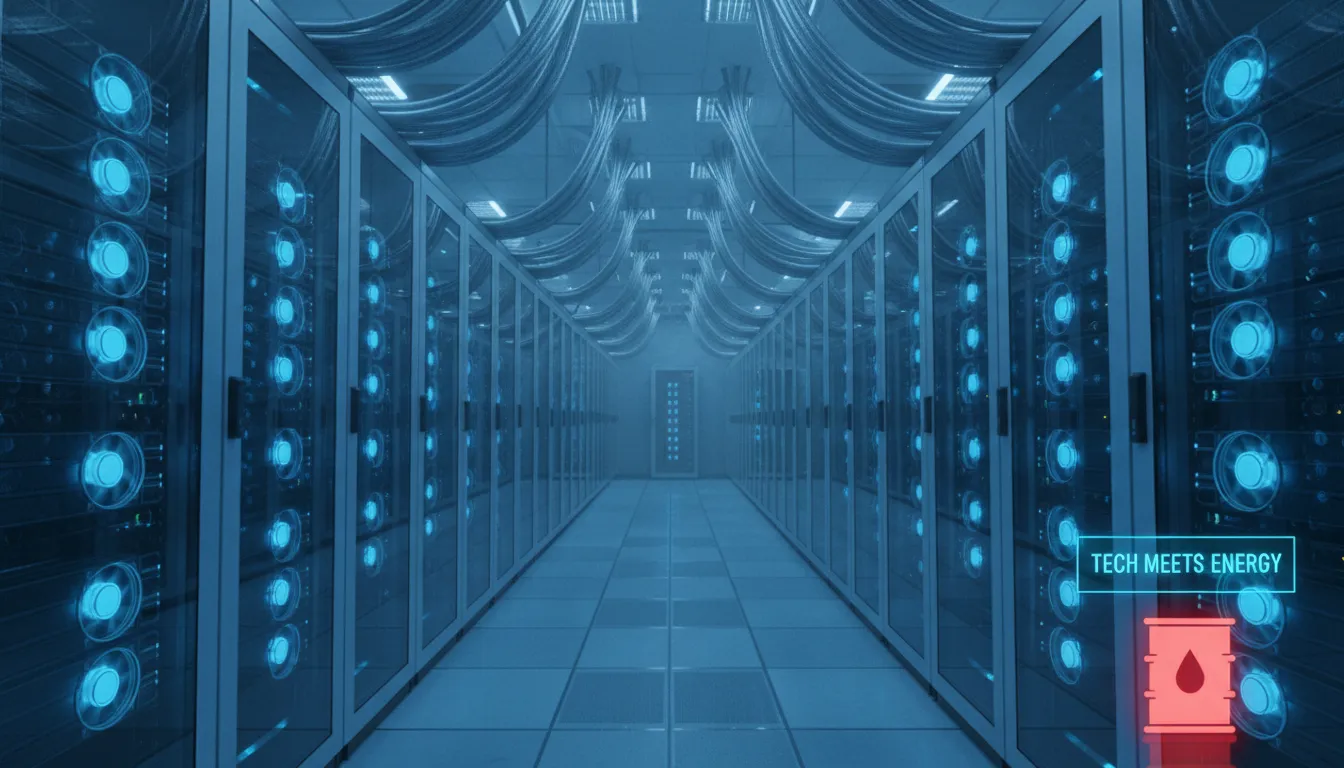
Artificial intelligence companies dominated global mergers and acquisitions activity in the first quarter of 2026, driving a record 22 deals valued above $10 billion—even as the Middle East conflict upended energy markets and sent oil prices above $100 per barrel. The deal wave signals that strategic investors are taking a long view on AI's transformative potential, even as the sector's voracious appetite for energy collides head-on with one of the most severe supply disruptions in decades.
A Record Quarter for Dealmaking
According to data compiled by Reuters, Q1 2026 was the most active quarter for large-cap M&A since records began, with 22 transactions clearing the $10 billion threshold. The technology sector, and artificial intelligence in particular, accounted for the overwhelming majority of that volume. The figures include both traditional acquisitions and major equity stake sales, with the latter category dominated by AI infrastructure and model providers raising capital at valuations that would have seemed implausible just two years ago.
The headline transactions were staggering in scale. OpenAI closed a $110 billion capital raise during the quarter, the largest single private funding round in history by a significant margin, with participation from sovereign wealth funds, pension managers, and strategic corporate investors across three continents. Anthropic followed with a $30 billion round, itself among the top-five largest private funding events ever recorded. Together, those two transactions alone represented more capital deployed than most industries attract in an entire year.
"Deals are driven by strategic rationale, which is stronger than short-term volatility in the market." — Philipp Beck, Head of EMEA M&A, UBS
Beck's assessment reflects a broader shift in how institutional capital is approaching the AI sector. Rather than pulling back in the face of geopolitical turbulence, major dealmakers appear to be accelerating, treating the current dislocation as a window of opportunity rather than a reason for caution. Energy costs, for now, are treated as an operational variable to be managed rather than a strategic constraint capable of derailing the AI investment thesis.
The Energy Equation Cannot Be Ignored
But the math of powering AI at scale is becoming harder to dismiss. AI data centers are among the most energy-intensive facilities ever built, with hyperscale GPU clusters consuming hundreds of megawatts each. Industry analysts estimate that training a single frontier AI model can consume as much electricity as a small city uses in a year. As the installed base of AI infrastructure expands at the pace implied by Q1's deal flow, total energy demand from the sector is projected to double within 18 months.
That trajectory intersects uncomfortably with the current state of global energy supply. Middle Eastern producers have seen combined daily output fall by more than 10 million barrels since hostilities escalated, removing a supply buffer that the market had come to rely upon. The Strait of Hormuz, through which roughly 20% of the world's seaborne crude passes, remains a flashpoint, with insurance surcharges and voluntary rerouting adding cost and delay to supply chains that run from Gulf terminals to refineries in Asia and Europe.
Beyond crude oil, the conflict has exposed vulnerabilities further up the energy and materials supply chain. Helium—a critical input in semiconductor fabrication and the cooling of quantum computing infrastructure—is sourced in significant quantities from facilities in the Gulf region. Disruptions to helium supply carry cascading implications for chip production timelines, and by extension for the hardware buildout that AI expansion depends upon.
Geopolitical Shock Meets Long-Term Strategy
The apparent disconnect between record AI investment and deteriorating energy fundamentals has drawn scrutiny from energy economists and market strategists. Some argue that the deal wave reflects a rational bet: that energy constraints are temporary and that the strategic value of AI positioning outweighs near-term input cost pressure. Others contend that capital allocators are systematically underpricing the energy risk embedded in AI infrastructure plays, particularly those reliant on grid power in regions exposed to supply volatility.
"The AI sector is building a skyscraper on a foundation it does not fully control. Energy is the bedrock of every data center, every chip, every training run. Right now, that bedrock is shifting." — Senior energy economist, European investment bank
The geopolitical dimension extends beyond near-term price volatility. Analysts at several major institutions have warned that a prolonged conflict could suppress global economic recovery for months, with inflation pressures rippling from energy costs into labour, logistics, and capital markets. Central banks, still navigating the aftermath of the prior inflationary cycle, face renewed pressure to balance growth support against price stability—a tension that has historically led to tighter credit conditions and slower M&A markets.
Supply Chain Fragility in Focus
The conflict has sharpened investor attention on the physical supply chains that underpin the AI economy. Semiconductor fabs, which are central to every AI hardware roadmap, require an uninterrupted supply of specialty gases, ultra-pure water, rare earth materials, and stable power. Several of these inputs are sourced from or transit through regions now experiencing active disruption.
Chipmakers including those supplying the GPU clusters at the heart of leading AI data centers have quietly begun accelerating supplier diversification programs and building strategic inventory buffers, according to industry sources. The additional cost of these hedges will eventually surface in hardware pricing, which in turn feeds into the total cost of ownership calculations for AI infrastructure—a variable that has so far been treated optimistically in most financial models underwriting the current deal wave.
Electricity procurement is the most immediate pressure point. Several major cloud and AI infrastructure operators have announced long-term power purchase agreements at prices well above year-ago levels, locking in supply but at a cost basis that compresses margins in their data center economics. For startups and mid-tier AI companies without the balance sheet to secure multi-decade PPAs, spot power markets in key data center regions have become a significant and unpredictable operational cost.
Outlook: Strategic Resilience Being Tested
For the remainder of 2026, the central question for investors is whether the strategic logic driving AI deal flow can withstand a sustained period of elevated energy costs and supply chain friction. The Q1 data suggests conviction remains high: 22 mega-deals in a single quarter, executed against a backdrop of $100-plus crude and active military conflict in a critical energy corridor, represents a remarkable demonstration of capital commitment.
But conviction and reality are not the same thing. Global economic recovery timelines are being revised downward as energy inflation filters through to producer prices and consumer spending. If energy costs remain elevated through mid-year, the demand outlook for enterprise AI adoption—the revenue engine that ultimately has to justify Q1's record valuations—will face meaningful headwinds. The deals have been signed; now they have to be made to work in an energy environment that nobody modelled when the term sheets were drafted.
The intersection of AI's ascent and energy's constraints is the defining tension in global markets as 2026's second quarter begins. Record deal flow has established what investors believe about the future. Energy markets are now testing whether that belief can survive contact with the present.